Doorframe Row
A pulling exercise using any sturdy doorframe to build upper back, lat, and bicep strength at home — one of the few effective back exercises that requires zero equipment.
The Doorframe Row is one of three no-equipment moves in the free 5-Minute Back Formula for adults over 40.
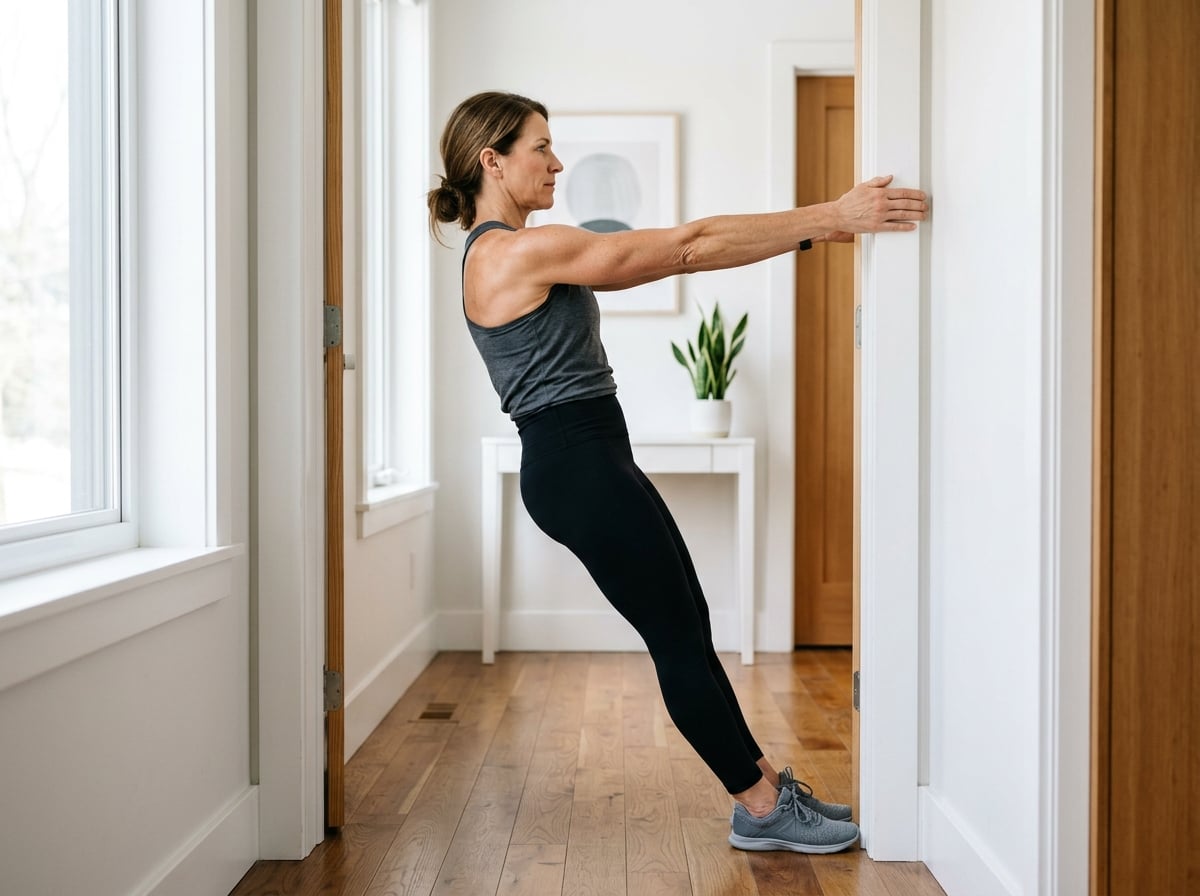
How to Do It
- 1Stand in a doorframe or use towel wrapped around sturdy post
- 2Hold both sides of frame or towel ends
- 3Walk feet forward and lean back
- 4Keep body in straight line, core engaged
- 5Pull chest toward frame/towel
- 6Squeeze shoulder blades together
- 7Keep elbows close to sides
- 8Lower with control
- 9The more horizontal you are, the harder it is
Back Pain After 40
This move is one piece of a bigger picture. See how it fits into the free 5-minute routine — plus the other no-equipment exercises chosen specifically for the muscles that fail after 40.
Explore the Back Pain After 40 guideHow Many Calories Do Doorframe Rows Burn?
Rowing exercises burn a solid amount of calories because they engage large muscle groups — the lats, upper back, and biceps simultaneously. Your exact burn depends on body angle, tempo, and volume. Use our free calculator to check.
Calculate Your Calories Burned →Common Mistakes to Avoid
Make It Easier
- More vertical body angle
- Feet closer
- Bent knees
Make It Harder
- More horizontal angle
- Single-arm row
- Pause at top
Why Back Exercises Are the Most Important Exercises You're Probably Skipping
Most home workout routines are push-dominant — push-ups, planks, squats, lunges. These are all excellent exercises, but they create a muscular imbalance when pulling exercises are absent. The muscles on the front of your body (chest, front shoulders, quads) get strong while the muscles on the back (lats, rhomboids, rear delts, hamstrings) stay weak. This imbalance is the single biggest contributor to the rounded-shoulder, forward-head posture that plagues anyone who sits at a desk. The doorframe row is one of the most accessible solutions because it requires nothing you don't already have — a doorframe. It directly trains the lats, rhomboids, and mid-trapezius, building the pulling strength that counterbalances all that pushing. If you do push-ups in your home workout, you should be doing doorframe rows in equal volume. Your posture, shoulder health, and upper back strength will improve measurably within weeks.
Doorframe Rows After 40 — Building the Back You've Been Neglecting
By 40, most adults have accumulated 20+ years of desk work, driving, and screen time — all of which systematically weaken the posterior chain muscles. The upper back, lats, and rear shoulders atrophy while the chest and front shoulders tighten. The doorframe row reverses this pattern efficiently. The exercise is self-scaling: stand more upright for an easier variation, walk your feet forward for a harder one. This makes it accessible at any starting strength level. For adults over 40, focus on squeezing the shoulder blades together at the top of each rep and controlling the lowering phase — the eccentric portion builds more muscle and tendon strength than the pulling phase. Start with 3 sets of 8-10 reps at a moderate angle and progress by increasing the lean angle every 1-2 weeks. Within a month of consistent practice, most people notice measurably better posture and reduced upper back tension.
Strengthen your back — and support it while you sit
Doorframe rows build the upper-back strength that helps you hold a taller, more comfortable posture. If you spend long hours at a desk or behind the wheel, a contoured lumbar cushion supports your lower back while you sit — a simple complement to the strength you're building here.
See the Contour Lumbar Back CushionThis is an affiliate link. We earn a small commission if you purchase at no extra cost to you. We only recommend products we believe in.
Frequently Asked Questions
How often should I do the Doorframe Row?
Daily is fine. The Doorframe Row uses your bodyweight and a doorframe so recovery is minimal. Most adults over 40 benefit from doing it every morning as part of their 5-minute back routine.
Is the Doorframe Row good for lower back pain?
Yes. It builds the pulling strength your mid-back loses from sitting, which directly reduces the compensation your lower back does to keep you upright. Most people notice reduced tension within two to three weeks of daily practice.
What muscles does the Doorframe Row work?
Primarily your rhomboids, middle and lower trapezius, rear deltoids, and biceps — exactly the muscles that weaken from desk work and forward-rounded posture.
Can beginners do the Doorframe Row?
Absolutely. Start with your feet closer to the doorframe so the angle is less steep. As you get stronger walk your feet further forward to increase difficulty.
What is a good alternative to the Doorframe Row?
The Reverse Snow Angel targets similar muscles lying face down. Both exercises together make up the core of the 5-Minute Back Formula.
Quick Stats
Perfect For
Related Exercises
Helpful Fitness Tools
Plan your training and nutrition for better results:
55+ Free Exercises — No Equipment
Browse the full exercise library with step-by-step guides for every muscle group. All bodyweight, all free, all designed for home workouts.
Get The Weekly Formula — Free
Want more moves like this every week? Get one exercise, one insight, and one quick win — built for adults over 40. Free forever.
Send Me The Formula →