Hip Flexor Stretch
A half-kneeling stretch that targets the hip flexors shortened by hours of sitting — loosening the front of the hip, easing the forward pelvic tilt behind desk-worker back pain, and restoring the mobility you need to stand tall.
Loosening tight hip flexors supports the free 5-Minute Back Formula for back pain after 40.
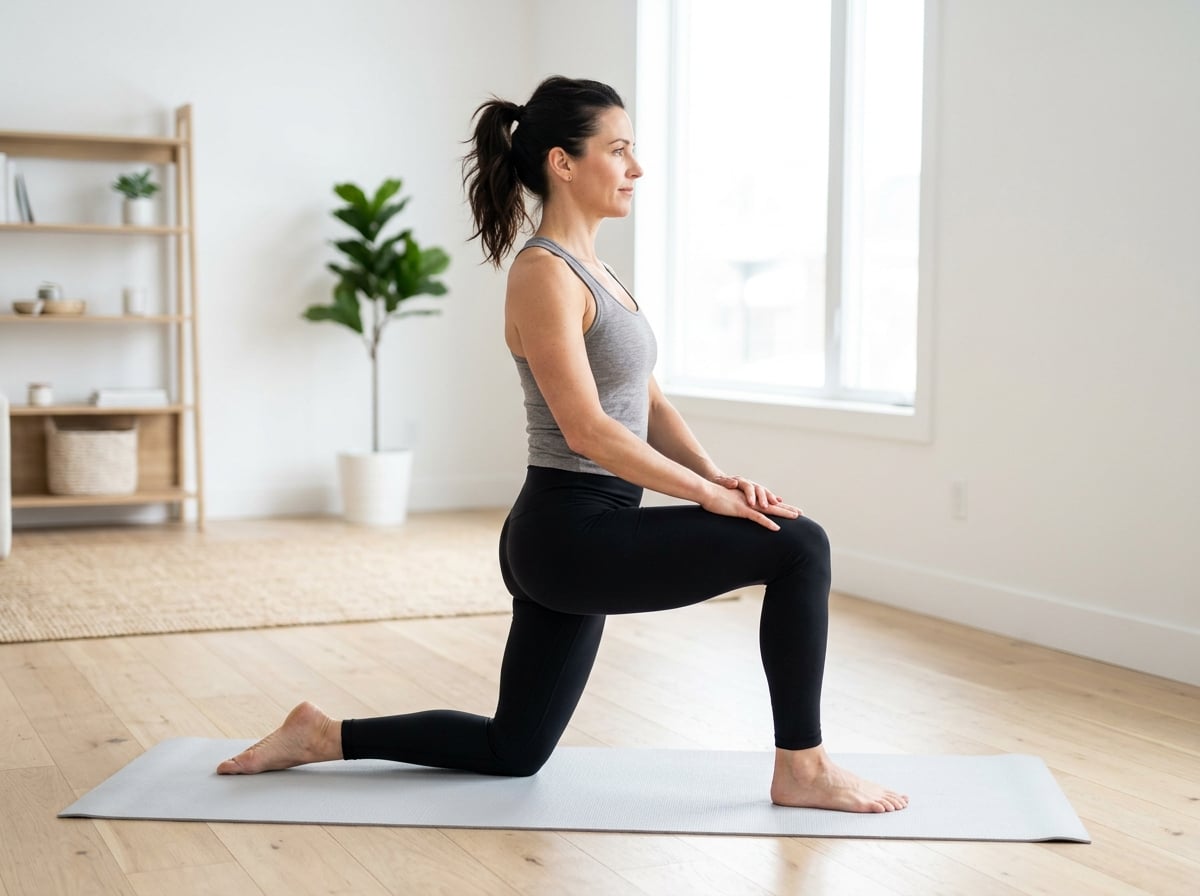
How to Do It
- 1Start in half-kneeling position (lunge stance)
- 2Right foot forward, flat on floor, knee at 90 degrees
- 3Left knee on floor, shin flat behind you
- 4Keep torso upright, core engaged
- 5Gently press hips forward until you feel stretch in left hip
- 6Don't arch lower back - tuck pelvis slightly
- 7You can place hands on front thigh for support
- 8Hold 30-60 seconds, switch sides
Back Pain After 40
This move is one piece of a bigger picture. See how it fits into the free 5-minute routine — plus the other no-equipment exercises chosen specifically for the muscles that fail after 40.
Explore the Back Pain After 40 guideCommon Mistakes to Avoid
Make It Easier
- Use cushion under knee
- Hands on chair for support
- Less forward hip press
Make It Harder
- Reach arm overhead on same side
- Add rotation
- Elevated rear foot (couch stretch)
Why Sitting Wrecks Your Hip Flexors — and Why This Stretch Helps
Your hip flexors — chiefly the iliopsoas — run from your lower spine to the top of your thigh. When you sit, they're parked in a shortened position for hours, and over time the tissue adapts to that length and feels chronically tight. Tight hip flexors tug the pelvis into a forward tilt, which exaggerates the arch in your lower back and, frustratingly, tends to switch off the glutes that are supposed to support you. That combination — tight in front, weak behind — is a classic driver of the nagging lower-back tension so common in desk workers. The half-kneeling hip flexor stretch targets the front of the hip directly, giving those shortened muscles a chance to lengthen and letting your pelvis settle back into a more neutral, tall position.
Hip Flexor Stretch After 40 — Stretch, But Also Move and Strengthen
Here's the honest part most stretching guides skip: you cannot fully out-stretch a full day of sitting. Hold each side for 30–60 seconds and repeat 2–3 times — keeping your torso tall and your pelvis slightly tucked so the stretch lands across the front of the back-leg hip, never in your lower back. But treat the stretch as relief, not the whole fix. The two habits that actually change the pattern are movement and strength: break up long sitting with frequent standing and short walks, and strengthen the muscles that oppose the hip flexors — especially the glutes (the glute bridge is the ideal partner move) and the deep core. After 40 this pairing matters even more, because the pelvic tilt and glute shutdown compound the longer they go unaddressed. Stretch daily, move often, and strengthen the back of the body, and the front of your hips finally gets a reason to let go.
Frequently Asked Questions
Why do desk workers get tight hip flexors?
When you sit, your hip flexors (mainly the iliopsoas) are held in a shortened, contracted position for hours at a time. Over months and years the tissue adapts to that shortened length, so the muscles feel tight and pull the pelvis forward. This is a core part of what's often called 'lower-crossed syndrome,' and it commonly shows up as lower-back tension and a forward pelvic tilt.
How long should I hold a hip flexor stretch?
Hold each side for 30-60 seconds and repeat 2-3 times per side. Keep your pelvis slightly tucked and your torso upright so you feel the stretch across the front of the hip and thigh of the back leg — not in your lower back. Breathe steadily and ease deeper on each exhale rather than forcing the position.
Will stretching alone fix tight hips from sitting?
Not on its own. A few minutes of stretching cannot fully offset 8+ hours of daily sitting. The most effective approach pairs this stretch with two other habits: breaking up sitting with frequent standing and movement, and strengthening the muscles that oppose the hip flexors — especially the glutes (glute bridges are ideal) and core. Stretch to relieve, but strengthen and move to actually change the pattern.
Can tight hip flexors cause lower back pain?
They can contribute to it. Chronically tight hip flexors tilt the pelvis forward and increase the arch in the lower back, which loads the lumbar spine and often switches off the glutes. That combination — tight in front, weak behind — is a common driver of nagging lower-back tension in people who sit a lot. Loosening the hip flexors and strengthening the glutes together usually helps more than either alone.
How often should I stretch my hip flexors?
Daily is ideal if you sit for a living. Because it's a gentle, low-load stretch, there's no recovery downside to doing it every day — and consistency is what actually shifts tissue length over time. Even one focused round in the morning or evening, plus a quick version during the workday, makes a noticeable difference within a few weeks.
Quick Stats
Perfect For
Related Exercises
Helpful Fitness Tools
Plan your training and nutrition for better results:
55+ Free Exercises — No Equipment
Browse the full exercise library with step-by-step guides for every muscle group. All bodyweight, all free, all designed for home workouts.
Get The Weekly Formula — Free
Want more moves like this every week? Get one exercise, one insight, and one quick win — built for adults over 40. Free forever.
Send Me The Formula →