Russian Twist
A seated rotational core exercise that builds oblique strength and rotational power using just your bodyweight — effective for waist definition and functional core training.
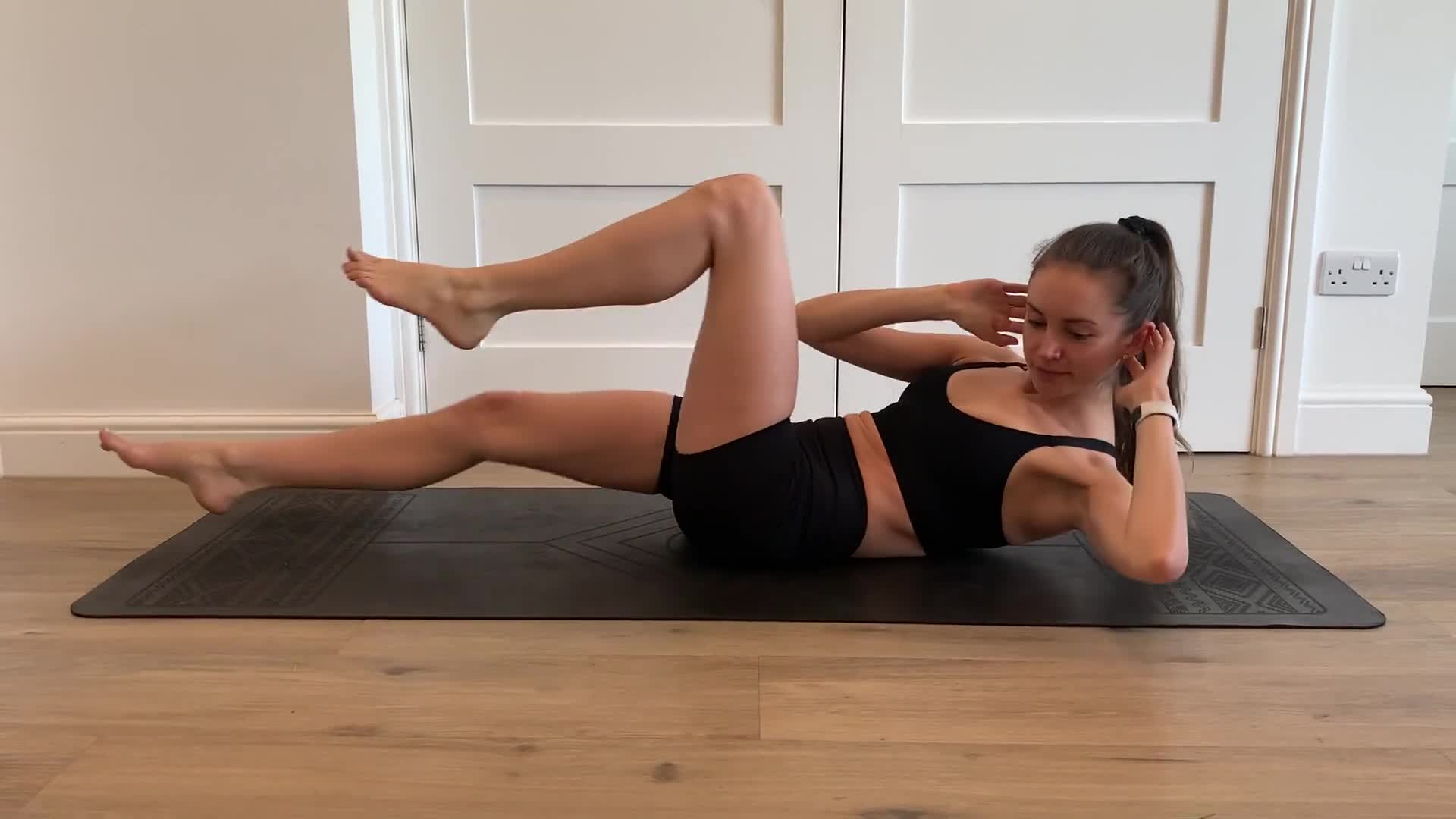
How to Do It
- 1Sit on floor with knees bent, feet flat
- 2Lean back slightly, keeping back straight
- 3Lift feet a few inches off floor (or keep on floor for easier)
- 4Clasp hands together at chest
- 5Rotate torso to the right, bringing hands beside hip
- 6Tap floor if possible
- 7Rotate to the left side
- 8Keep chest up, core engaged throughout
How Many Calories Do Russian Twists Burn?
Russian twists are a moderate-intensity core exercise — calorie burn depends on your weight, tempo, and whether you add resistance. They burn more than planks due to the active rotational movement. Use our free calculator for your estimate.
Calculate Your Calories Burned →Common Mistakes to Avoid
Make It Easier
- Feet on floor
- Less lean back
- Slower tempo
- Hands at chest
Make It Harder
- Feet elevated higher
- Hold weight
- Pause at each side
- Increase tempo
Why Rotational Core Training Matters
Most core training focuses on flexion (crunches) or stability (planks) — and both are valuable. But the core has a third critical function that gets neglected: rotation. Every time you reach across your body, turn to look behind you while driving, swing a golf club, or twist to grab something off a shelf, your obliques are generating and controlling rotational force. The Russian twist trains this pattern directly. The seated, leaned-back position creates a challenging environment for the rectus abdominis (front abs) and hip flexors to maintain posture, while the rotation under load directly targets the internal and external obliques. This combination makes the Russian twist one of the most efficient core exercises available — it hits the front of the core and the sides simultaneously in a single movement. For functional core strength that transfers to daily life, rotation training is not optional.
Russian Twists After 40 — Form Matters More Than Speed
The Russian twist is safe and effective after 40 — but only with proper form. The most common mistake at any age is rounding the lower back and using momentum to whip side to side, which places shear force on the lumbar spine. After 40, spinal discs are less resilient and recover slower from strain, making this form error more consequential. The fix is straightforward: keep your chest up, maintain a neutral spine, and rotate slowly with control. Pause briefly at each side. If your lower back rounds or you feel strain, reduce the lean-back angle or keep your feet on the floor instead of elevated. Speed is irrelevant — a slow, controlled twist with good form is dramatically more effective (and safer) than rapid sloppy reps. Start with bodyweight only and add resistance (a water bottle, light dumbbell, or book) only after your form is consistent.
Frequently Asked Questions
Do Russian Twists really work your obliques?
Yes — the Russian twist is one of the most effective bodyweight oblique exercises because the rotation against the resistance of gravity directly loads the internal and external obliques. EMG studies show significant oblique activation during controlled rotational movements. The key is rotating through the torso, not just moving your arms side to side.
Are Russian Twists bad for your back?
Russian twists can aggravate the lower back if performed with poor form — specifically, rounding the spine or using momentum. Keep your chest up and spine neutral throughout. If you have existing lower back issues, keep your feet on the floor (don't elevate them) and reduce the lean-back angle. If you experience any sharp pain, choose a different core exercise like Pallof presses or side planks.
How many Russian Twists should I do?
Start with 2–3 sets of 10–15 reps per side (20–30 total twists). Focus on controlled rotation with a brief pause at each side rather than rapid uncontrolled movement. Progress to 3 sets of 20 per side or add a light weight (water bottle, book) for resistance. Slow, controlled reps are significantly more effective than fast ones.
Should I lift my feet during Russian Twists?
Lifting your feet increases hip flexor engagement and core demand significantly — but it also increases the tendency to round the lower back. If you can maintain a neutral spine with feet elevated, it's a valid progression. If your lower back rounds or you feel strain, keep feet flat on the floor. The oblique rotation benefit is present either way.
What can I use instead of Russian Twists?
If Russian twists bother your back, excellent alternatives include: bicycle crunches (similar rotation with less spinal load), side planks (isometric oblique work), woodchops (standing rotation), and Pallof presses (anti-rotation training). All target the obliques through different mechanisms. A combination of rotational and anti-rotational core work is ideal.
Quick Stats
Perfect For
Helpful Fitness Tools
Plan your training and nutrition for better results:
55+ Free Exercises — No Equipment
Browse the full exercise library with step-by-step guides for every muscle group. All bodyweight, all free, all designed for home workouts.
Get The Weekly Formula — Free
Want more moves like this every week? Get one exercise, one insight, and one quick win — built for adults over 40. Free forever.
Send Me The Formula →