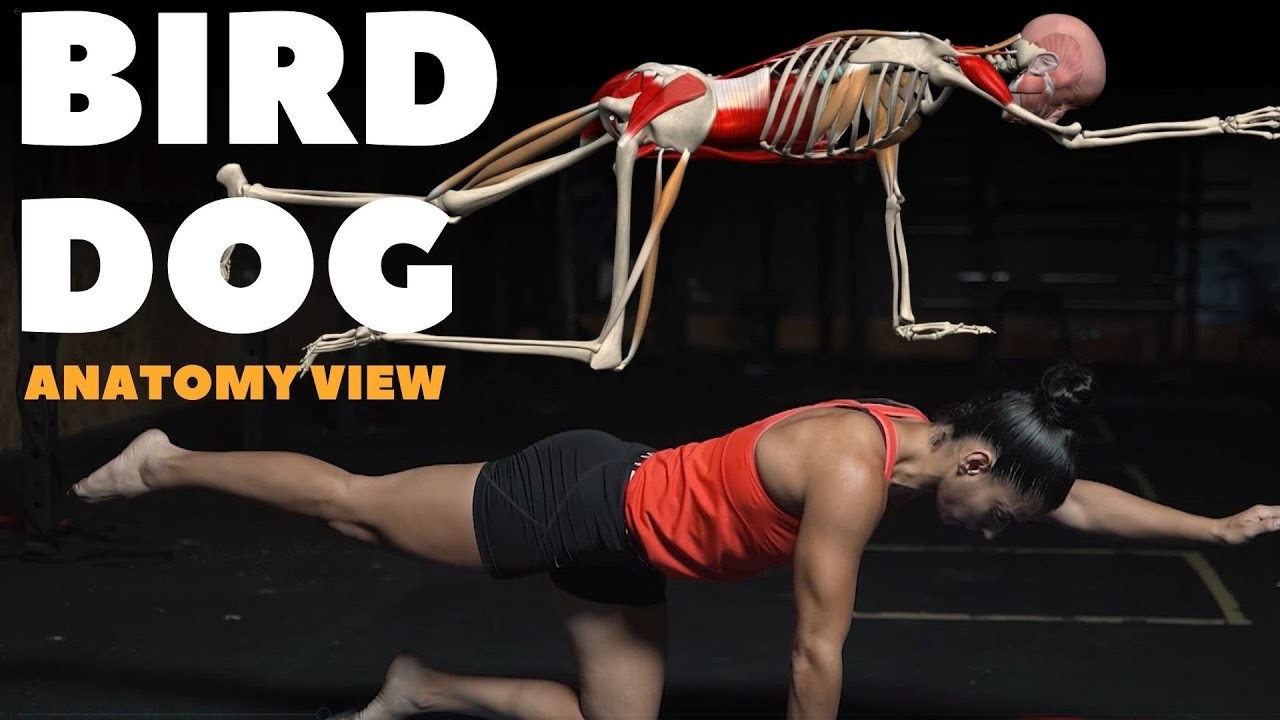
Dead Bug Exercise
A floor-based core-stability exercise that trains your deep core to keep your spine steady while your arms and legs move — a spine-safe, physical-therapist favorite for building the control that protects your lower back.
Dead Bug pairs perfectly with the free 5-Minute Back Formula for adults over 40.
How to Do It
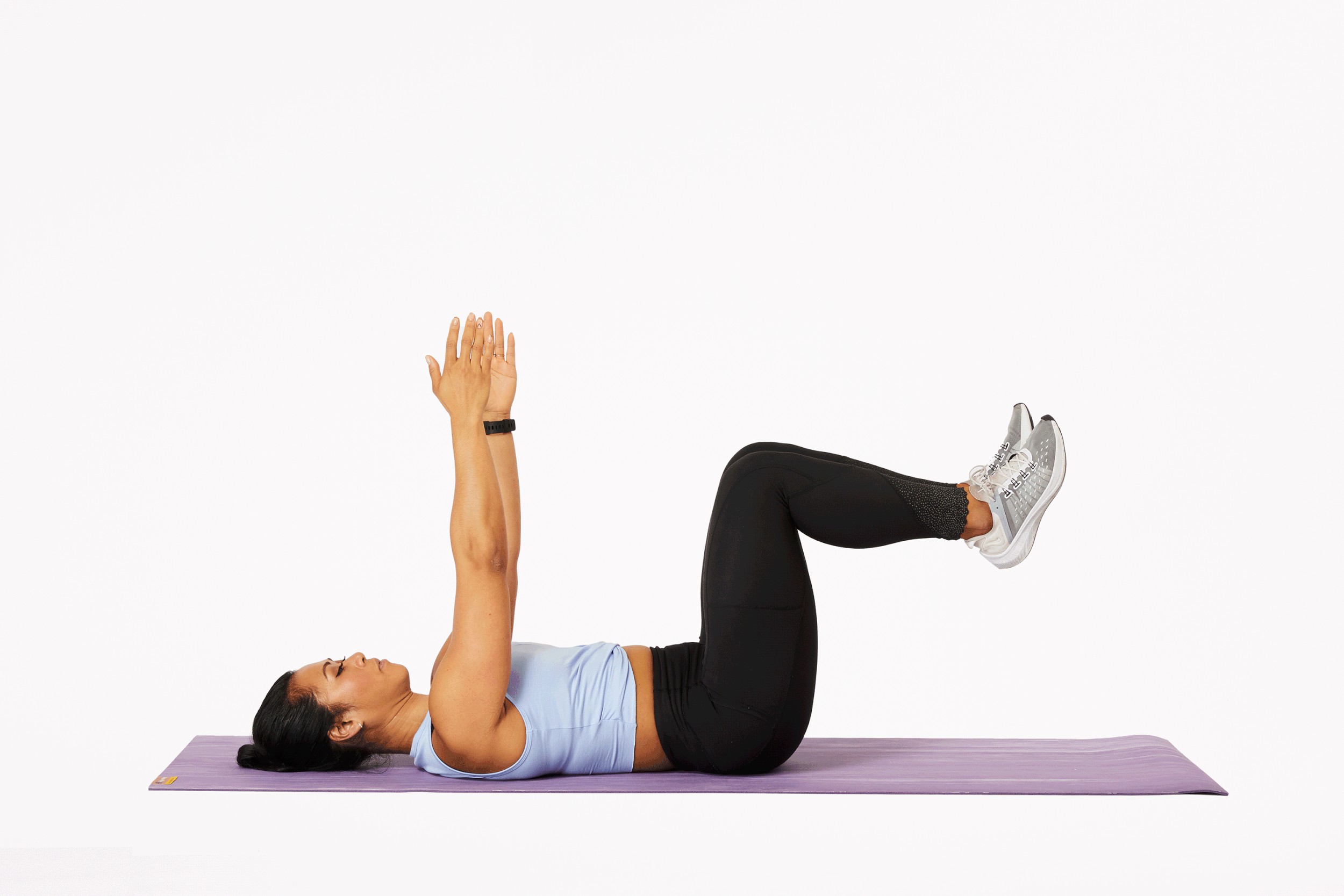
- 1Lie on your back with arms extended toward ceiling
- 2Lift knees to 90 degrees, shins parallel to floor
- 3Press lower back into floor - maintain throughout
- 4Slowly extend right arm overhead while straightening left leg
- 5Hover leg a few inches off floor
- 6Keep lower back pressed to floor - this is key
- 7Return to start position
- 8Repeat on opposite side
- 9Move slowly and with control
Back Pain After 40
This move is one piece of a bigger picture. See how it fits into the free 5-minute routine — plus the other no-equipment exercises chosen specifically for the muscles that fail after 40.
Explore the Back Pain After 40 guideCommon Mistakes to Avoid
Make It Easier
- Move only arms
- Move only legs
- Keep knees bent
- Smaller range of motion
Make It Harder
- Hover both limbs off floor
- Add pause at extension
- Slow tempo (5 seconds out)
Why the Dead Bug Is a Spine-Safe Core Builder
Most people train their core by flexing the spine — crunches, sit-ups, endless twists. The dead bug does the opposite, and that's the point. Its job is anti-extension: keeping your lower back flat and steady while your arms and legs move independently. That's the exact skill your core actually uses in real life — staying stable while your limbs do the work of walking, lifting, reaching, and carrying. Because you stay flat on the floor with your spine supported, the dead bug builds deep-core control (the transverse abdominis and the small stabilizers around each vertebra) without the compression and repeated flexion that can aggravate a sensitive back. It's a favorite of physical therapists for exactly that reason: high control demand, very low spinal risk.
Dead Bug After 40 — Control Over Crunches
As core strength and coordination quietly decline with age, the ability to keep your spine stable while you move becomes one of the most protective things you can train — and it's far more useful than chasing a six-pack. Start with 2–3 sets of 6–12 slow, controlled reps per side. The single rule that makes or breaks the exercise: keep your lower back pressed gently into the floor the entire time. The moment it starts to arch up, you've found your limit — shorten the range or stop the set rather than letting the back lift. One common myth worth clearing up: the dead bug is often lumped in with Dr. Stuart McGill's "Big 3," but it isn't one of them (those are the curl-up, side plank, and bird dog). It shares the same spine-sparing philosophy, though, and is one of the most commonly programmed companion drills alongside them in back-care routines.
Strengthen your back — and support it while you sit
Doorframe rows build the upper-back strength that helps you hold a taller, more comfortable posture. If you spend long hours at a desk or behind the wheel, a contoured lumbar cushion supports your lower back while you sit — a simple complement to the strength you're building here.
See the Contour Lumbar Back CushionThis is an affiliate link. We earn a small commission if you purchase at no extra cost to you. We only recommend products we believe in.
Frequently Asked Questions
What muscles does the dead bug work?
The dead bug trains the deep core — the transverse abdominis and the deep stabilizers that keep your spine steady — along with the rectus abdominis, obliques, and hip flexors. Its real job is anti-extension: teaching your core to keep the lower back flat and stable while your arms and legs move independently. That's exactly the kind of control your spine needs in daily life.
How many dead bugs should I do?
Start with 2-3 sets of 6-12 slow, controlled reps per side. Quality beats quantity here — the goal is to keep your lower back pressed to the floor the entire time. If your back starts to arch off the floor, that's your cutoff: stop the set or reduce the range. Move slowly and breathe throughout rather than racing through reps.
Is the dead bug good for lower back pain?
Yes — it's one of the safest core exercises for people prone to back pain because it builds core stability without loading or compressing the spine the way crunches and sit-ups do. By training you to brace and keep a neutral spine while your limbs move, it strengthens the exact control that protects your lower back. Keep the range small at first and stop if you feel any sharp pain.
Is the dead bug part of the McGill Big 3?
No — and it's a common mix-up. Dr. Stuart McGill's 'Big 3' are the curl-up, the side plank, and the bird dog. The dead bug isn't one of the three, but it shares the same philosophy (build spine-sparing core stability without flexing the spine under load) and is very frequently programmed alongside the Big 3 in rehab and back-care routines as a complementary drill.
What's the most common dead bug mistake?
Letting the lower back arch up off the floor as the arm and leg extend. The moment your back lifts, the exercise stops training stability and starts stressing the lumbar spine. The fix: press your lower back gently into the floor and keep it there, extend your limbs only as far as you can while maintaining that contact, and move slowly. Reduce the range before you sacrifice the flat-back position.
Quick Stats
Perfect For
Helpful Fitness Tools
Plan your training and nutrition for better results:
55+ Free Exercises — No Equipment
Browse the full exercise library with step-by-step guides for every muscle group. All bodyweight, all free, all designed for home workouts.
Get The Weekly Formula — Free
Want more moves like this every week? Get one exercise, one insight, and one quick win — built for adults over 40. Free forever.
Send Me The Formula →