Wall Sit Exercise
An isometric hold where you sit against a wall with thighs parallel to the floor — builds quad endurance and knee stability without any impact or equipment.
Why This Matters After 40
Knee health becomes a priority after 40. The Wall Sit builds quad strength and knee stability without any joint impact — making it one of the safest lower body exercises for adults dealing with knee discomfort or recovering from injury.
Want more exercises like this every week? Get The Weekly Formula — one move, one insight, one quick win for adults over 40. Free forever.
Get The Formula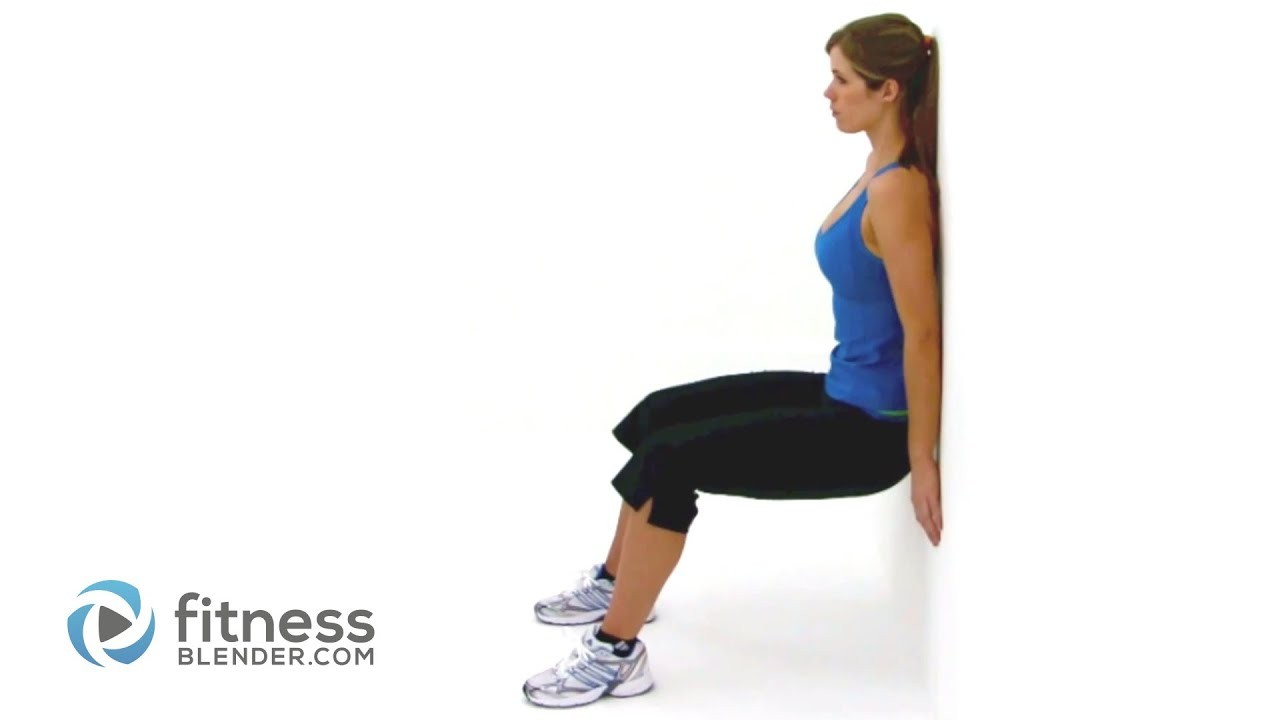
How to Do It
- 1Stand with your back against a wall
- 2Walk your feet out about 2 feet from the wall
- 3Slide down the wall until thighs are parallel to the floor
- 4Your knees should be at 90 degrees, directly above your ankles
- 5Keep your back flat against the wall
- 6Hold this position, breathing normally
- 7Start with 20-30 seconds and build up over time
Back Pain After 40
This move is one piece of a bigger picture. See how it fits into the free 5-minute routine — plus the other no-equipment exercises chosen specifically for the muscles that fail after 40.
Explore the Back Pain After 40 guideHow Many Calories Do Wall Sits Burn?
Wall sits are an isometric exercise — calorie burn is lower than dynamic movements but still meaningful, especially when held for longer durations or performed in multiple sets. Use our free Calories Burned Calculator to find your specific number.
Calculate Your Calories Burned →Common Mistakes to Avoid
Make It Easier
- Higher wall sit (less knee bend)
- Shorter hold time
- Feet closer to wall
Make It Harder
- Single-leg wall sit
- Wall sit with calf raises
- Longer hold times (60+ seconds)
Why the Wall Sit Is More Valuable Than It Looks
The wall sit is one of the most underrated exercises in existence. It looks passive — you're just sitting against a wall — but the quadriceps are sustaining a continuous isometric contraction throughout the entire hold. There's no rest at the top, no momentum to coast on, no way to cheat the movement. Your muscles are under constant tension from start to finish. This makes wall sits uniquely effective for building the type of muscular endurance that transfers directly to real life — climbing stairs, getting up from chairs, hiking, skiing, and any activity that demands sustained leg strength. Research shows that isometric training also has a measurable blood pressure-lowering effect, making it one of the few exercises with both musculoskeletal and cardiovascular benefits simultaneously. For anyone who sits at a desk all day, a 60-second wall sit is one of the fastest ways to re-engage the quads and glutes that prolonged sitting systematically deactivates.
Wall Sits After 40 — Joint-Friendly Leg Training
After 40, joint health becomes an increasingly important factor in exercise selection. Wall sits are exceptionally joint-friendly because there's no impact, no rapid direction changes, and no movement through the knee joint — the angle stays fixed throughout. This means the knee cartilage isn't subjected to repetitive compression-decompression cycles the way it is during squats, lunges, or running. For adults with mild knee sensitivity or early-stage osteoarthritis, wall sits often remain comfortable when dynamic leg exercises become problematic. They also strengthen the VMO — the inner quad muscle that stabilizes the kneecap — which is frequently weak in people with knee pain. Physical therapists regularly prescribe wall sits as part of knee rehabilitation programs for exactly this reason. Start with a higher position (less than 90 degrees) if full depth causes discomfort, and progress the depth gradually as your quad strength improves.
Frequently Asked Questions
How long should you hold a Wall Sit?
Start with 20–30 seconds for 3 sets. Most beginners hit muscular fatigue around 30–45 seconds. Intermediate practitioners should aim for 45–60 seconds per set. Beyond 90 seconds, you're training endurance more than strength — at that point, progress to single-leg wall sits or add weight on your lap instead of extending time.
What muscles do Wall Sits work?
Wall sits primarily target the quadriceps (front of the thigh), which sustain an isometric contraction throughout the hold. Secondary muscles include the glutes, which help stabilize the hip angle, the calves which maintain ankle position, and the core which keeps your torso upright against the wall. The hamstrings are also engaged as stabilizers.
Are Wall Sits bad for your knees?
For most people, wall sits are knee-friendly because there's no impact and no movement through the joint — the knee angle stays fixed. If you have existing knee pain, position your feet farther from the wall so your knees stay behind your toes and use a higher seat position (less than 90 degrees). If pain persists at any angle, stop and consult a healthcare professional.
Do Wall Sits build muscle or just endurance?
Wall sits primarily build muscular endurance and isometric strength rather than muscle size. Isometric exercises like wall sits strengthen the muscle at the specific angle held. For muscle growth (hypertrophy), you need exercises with movement through a range of motion — squats, lunges, and step-ups are better for building leg size. Wall sits are excellent as a complement to those exercises.
Can you do Wall Sits every day?
Yes — wall sits are low-impact and don't cause significant muscle damage, making daily practice safe for most people. They're particularly effective as a daily addition to a desk-bound routine because they activate the quads and glutes after prolonged sitting. However, if you're doing them to muscle failure, allow 24–48 hours between sessions.
Are Wall Sits good for runners?
Yes — wall sits build quad endurance and knee stability, both of which are critical for running performance and injury prevention. They strengthen the VMO (vastus medialis oblique), the inner quad muscle that stabilizes the kneecap during running. Many running coaches recommend wall sits as part of injury prevention routines, particularly for runner's knee.
Quick Stats
Perfect For
Helpful Fitness Tools
Plan your training and nutrition for better results:
55+ Free Exercises — No Equipment
Browse the full exercise library with step-by-step guides for every muscle group. All bodyweight, all free, all designed for home workouts.
Get The Weekly Formula — Free
Want more moves like this every week? Get one exercise, one insight, and one quick win — built for adults over 40. Free forever.
Send Me The Formula →